Gynecology
Gynecology Guide
O
Op. Dr. Berrak Beyoğlu Oruç·April 2, 2026·13 min readA practical guide to female anatomy, gynecologic examination, menstrual health, vaginal discharge, cysts, endometriosis, fibroids, polyps, PCOS, and vaginismus.
Share
Guide Intro
Gynecologic health is not limited to treating disease after symptoms appear. It begins with understanding how the female body works, recognizing what is normal, and knowing when clinical evaluation is needed. Menstrual rhythm, vaginal discharge, ovarian cysts, endometriosis, fibroids, polyps, PCOS, and painful intercourse are all part of a broader conversation about preventive and individualized women's health care.
This guide brings together the core topics from female anatomy and hormone rhythm to gynecologic examination, healthy menstrual cycles, discharge patterns, cysts, endometriosis, fibroids, polyps, PCOS, vaginismus, and pain during intercourse. The content is educational and should not replace direct physician evaluation.
1
Topic
Understanding Our Bodies: Female Anatomy and Hormonal Rhythm
Female Anatomy
The female reproductive system includes both external and internal genital structures. The external genital area is called the vulva and includes the labia majora, labia minora, clitoris, and the vaginal opening. The clitoris plays an important role in sexual pleasure because it contains a dense network of nerve endings. The vulva is therefore important not only for protection but also for sexual function.
Internal reproductive organs include the vagina, cervix, uterus, fallopian tubes, and ovaries. The vagina forms the passage between the uterus and the outside world and also serves as the birth canal. The cervix acts as a bridge between the uterus and the vagina and has an essential role in both maintaining pregnancy and opening during labor.
The uterus is a muscular organ where pregnancy develops. Its inner lining is called the endometrium, and this tissue thickens every month under hormonal influence before being shed during menstruation if pregnancy does not occur. The fallopian tubes connect the ovaries to the uterus and are the place where fertilization normally happens if sperm meets the egg after ovulation. The ovaries produce eggs and also secrete key reproductive hormones. Their function plays a central role in menstrual rhythm, fertility, and hormonal balance.
Female Hormone Physiology and Cyclical Rhythm
The female body works with a rhythmic hormonal system that changes throughout the month. This system depends on communication between the brain and the ovaries. The hypothalamus releases GnRH, which stimulates the pituitary gland. The pituitary then releases FSH and LH, the hormones that guide ovarian activity.
In the first half of the cycle, FSH supports follicle development and estrogen levels rise. Estrogen helps thicken the uterine lining and also influences skin, bone health, mood, and energy. Around the middle of the cycle, a sudden rise in LH triggers ovulation. After ovulation, progesterone becomes dominant. Progesterone supports the uterus for a possible pregnancy and slightly increases body temperature.
If pregnancy does not occur, estrogen and progesterone levels fall. This hormonal drop leads to shedding of the uterine lining, which appears as menstrual bleeding. A new cycle then begins. This cyclical hormonal rhythm is one of the key indicators of gynecologic health.
How Is the Menstrual Cycle Calculated?
The menstrual cycle has two main phases: the follicular phase and the luteal phase. The follicular phase starts on the first day of menstruation and continues until ovulation. During this period follicles grow and estrogen rises. The length of this phase can vary from woman to woman and is the main reason overall cycle length differs.
The luteal phase begins after ovulation, when progesterone becomes the dominant hormone. In most women this phase lasts about 14 days. For practical cycle estimation, the ovulation day can often be approximated by subtracting 14 days from the total cycle length.
- In a 28-day cycle: 28 - 14 = day 14
- In a 35-day cycle: 35 - 14 = day 21
As cycle length increases, the follicular phase is usually the part that changes, while the luteal phase remains relatively stable in many women.
2
Topic
How Is a Gynecological Examination Performed?
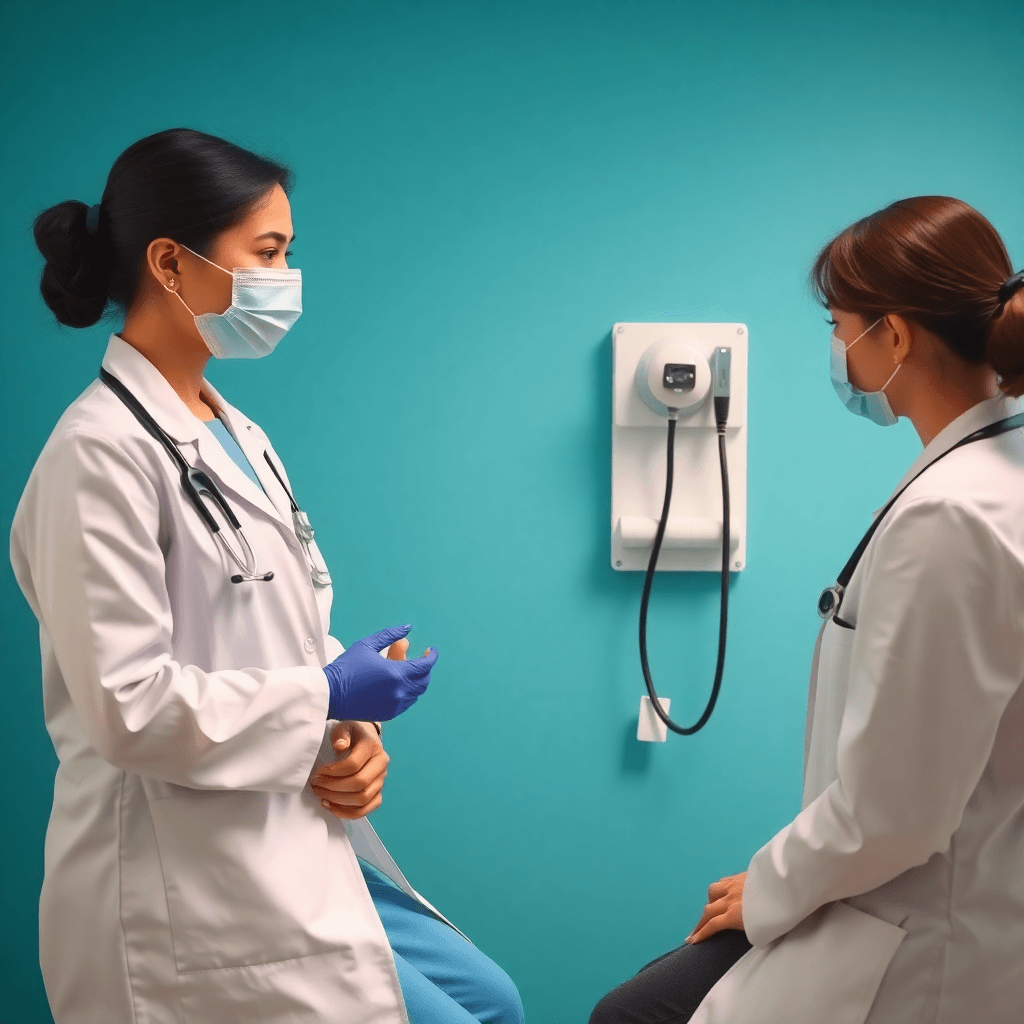
A gynecological examination is a routine medical evaluation used to assess the female reproductive organs. It can help guide diagnosis in problems such as menstrual irregularity, discharge, pain, abnormal bleeding, infection, and screening needs such as Pap smear or HPV testing. Before the examination, the patient should be informed, privacy should be protected, and the process should be performed gently.
The first step is often a speculum examination. A speculum is a medical instrument that gently separates the vaginal walls so the cervix can be seen. This allows the physician to assess discharge, observe the cervix, and collect smear or HPV samples when needed. Different speculum sizes can be chosen according to the patient's anatomy and birth history.
After that, a bimanual vaginal examination may be performed. In this stage, the physician evaluates the uterus and ovaries with one hand through the vagina and the other on the lower abdomen. This helps assess uterine position, size, tenderness, and whether there may be an ovarian mass or pain. Emptying the bladder before the examination is usually recommended because it improves comfort and makes the examination easier to tolerate.
3
Topic
What Should a Healthy Menstrual Cycle Be Like?
A healthy menstrual cycle is an important sign of hormonal and reproductive well-being. In general, the cycle length is measured from the first day of one period to the first day of the next and is usually considered normal when it falls between 21 and 35 days and remains reasonably predictable from month to month. Outside of adolescence and the menopausal transition, persistent irregularity deserves evaluation.
Menstrual bleeding usually lasts 3 to 7 days. Flow should not be so light that it seems absent, nor so heavy that it severely disrupts daily life. Passing clots, very heavy bleeding, or bleeding longer than a week may suggest hormonal, structural, or systemic problems that should be assessed.
Mild cramping can occur, but severe pain that disrupts work, school, sleep, or daily function should not be considered normal. The same is true for marked mood symptoms around the menstrual period. Menstrual rhythm can also be affected by stress, weight changes, intense exercise, nutrition, and endocrine disorders, so persistent changes should be discussed with a physician.
Alert Box
Tips to Ease Menstrual Pain
- Heat therapy on the lower abdomen or lower back may help relax the muscles and reduce cramping.
- Gentle walking and light exercise may improve circulation and reduce pain severity.
- Reducing excessive caffeine, salt, and sugar intake may help; magnesium-rich foods can also be supportive.
- Breathing and relaxation techniques may reduce stress-related muscle tension.
- Adequate sleep and stress management are important because poor rest can worsen menstrual pain.
- Appropriate pain relief under physician guidance may be useful, but frequent unsupervised use is not recommended.
- Magnesium supplementation may help some patients with cramps, PMS symptoms, stress, or sleep problems when used appropriately.
4
Topic
Vaginal Discharge: When Is It Normal and When Is It Not?
Vaginal discharge is a normal part of the vagina's natural self-cleaning and protective system. Physiologic discharge is usually clear or whitish, without a strong odor, and is not accompanied by itching or burning. The amount and texture may change during ovulation, pregnancy, sexual arousal, and other hormonal fluctuations.
During ovulation, discharge commonly becomes clearer, stretchier, and more slippery. In pregnancy, increased estrogen may lead to greater discharge volume. When these changes are not associated with pain, strong odor, or abnormal color, they are often considered normal.
However, discharge may sometimes reflect infection or another gynecologic condition. Yellow-green, foul-smelling, foamy, or curd-like discharge, especially when accompanied by itching, burning, pain during intercourse, or pain while urinating, is not considered normal. Sudden change, bleeding with discharge, bad odor, or associated pain should prompt gynecologic evaluation. Random vaginal products or repeated vaginal douching may disrupt the natural flora and make symptoms worse.
5
Topic
Why Does Menstrual Irregularity Occur?
Menstrual irregularity means that periods do not arrive in the expected time pattern, occur too often or too infrequently, or show major changes in duration or flow. Temporary irregularity can be seen in adolescence and in the menopausal transition, but ongoing irregularity during the reproductive years should be assessed.
One of the most common reasons is hormonal imbalance. PCOS, thyroid disorders, elevated prolactin, major weight change, severe stress, and excessive exercise can all interfere with ovulation and disturb menstrual rhythm. Structural conditions involving the uterus and ovaries, such as fibroids, polyps, thickening of the endometrium, cysts, or infection, can also lead to abnormal bleeding patterns.
Sometimes menstrual irregularity is the first sign of a broader systemic problem. If irregularity lasts more than a few months, if periods stop, or if bleeding becomes very heavy or painful, gynecologic evaluation is important for both reproductive health and overall well-being.
6
Topic
Severe Menstrual Pain (Dysmenorrhea)
Severe menstrual pain, or dysmenorrhea, refers to cramping and pelvic pain during menstruation that significantly affects quality of life. Pain may spread to the lower back or legs and is often strongest just before the period begins or during the first one or two days of bleeding. Mild cramps can be common, but severe pain that disrupts daily function is not considered normal.
Dysmenorrhea may be primary or secondary. Primary dysmenorrhea occurs without an underlying structural disease and is often related to prostaglandin-mediated uterine contractions, especially in younger patients. Secondary dysmenorrhea is linked to an underlying gynecologic cause such as endometriosis, adenomyosis, fibroids, pelvic infection, or an intrauterine device.
Nausea, vomiting, diarrhea, headache, fatigue, and faintness may accompany pain. If the pain worsens over time, persists outside menstruation, or does not respond to simple pain relief, the underlying cause should be investigated rather than only suppressing symptoms.
7
Topic
Ovarian Cysts
Ovarian cysts are fluid-filled or partially solid formations that develop in or on the ovary. Most are benign and commonly seen during the reproductive years. Many are found incidentally during routine examination or ultrasound. Their type, size, and the patient's age guide the decision between observation and treatment.
Simple functional cysts are the most common type and are related to the ovulation process. They are usually smooth, fluid-filled, and often disappear on their own over a few cycles. In many cases, ultrasound follow-up is enough.
Endometriomas, also known as chocolate cysts, develop when endometriosis affects the ovary. They may be associated with chronic pelvic pain, menstrual pain, and infertility. Dermoid cysts are congenital tumors that may contain fat, hair, bone, or tooth-like tissue. Even though they are usually benign and slow-growing, they may need surgical removal if they become large because of the risk of ovarian torsion.
8
Topic
What Is an Endometrioma (Chocolate Cyst)?
An endometrioma is commonly called a chocolate cyst because the old blood collected inside gives it a dark brown, thick appearance. On ultrasound it often appears as a homogeneous cyst with low-level internal echoes.
The most widely accepted explanation is retrograde menstruation. According to this theory, some menstrual blood flows backward through the fallopian tubes into the abdominal cavity. Endometrial cells then implant on the ovary and bleed repeatedly over time, eventually forming an endometrioma.
Endometrioma is one ovarian form of endometriosis and is one of the most frequent ovarian pathologies in reproductive-age women. It may appear on one or both sides and may grow slowly over time. Common symptoms include severe menstrual pain, chronic pelvic pain, pain during intercourse, and infertility, although some patients remain asymptomatic for a long time.
9
Topic
What Is Endometriosis? What Are Its Symptoms?
Endometriosis is a chronic inflammatory condition in which tissue similar to the endometrium grows outside the uterus. These implants respond to hormonal changes during the menstrual cycle and may bleed repeatedly, leading over time to inflammation, scarring, adhesions, and pain.
Deep infiltrating pelvic endometriosis is a more advanced form in which disease is not limited to the surface but extends deeper into pelvic tissues. It may affect the ligaments behind the uterus, the space between the uterus and bowel, the lower bowel, the bladder, or tissues around pelvic nerves.
Common symptoms include severe menstrual pain, chronic pelvic pain, deep pain during intercourse, and bowel symptoms that worsen around the menstrual period. Some patients also experience painful urination or bladder symptoms if the bladder is involved. Diagnosis is guided by symptoms, examination, and imaging, especially expert transvaginal ultrasound and pelvic MRI. Treatment is individualized according to symptoms, fertility plans, disease extent, and age.
10
Topic
What Are Fibroids (Myomas)?
Fibroids are benign tumors arising from the muscular layer of the uterus. They are among the most common pelvic masses in women and are especially common between the ages of 30 and 50. Many are found incidentally during routine examination or ultrasound.
Fibroids may be single or multiple and vary greatly in size. They are generally classified by location:
- Submucosal fibroids grow toward the uterine cavity and may increase bleeding.
- Intramural fibroids are located within the uterine wall and are the most common type.
- Subserosal fibroids grow toward the outer surface of the uterus and may press on surrounding organs.
Estrogen and progesterone play a role in fibroid growth, which is why fibroids are more active during reproductive years and often shrink after menopause. Not every fibroid causes symptoms, but some may lead to heavy periods, pelvic pressure, abdominal distension, urinary frequency, constipation, or fertility-related concerns.
11
Topic
What Is a Polyp? (Endometrial Polyp)
An endometrial polyp is a usually benign tissue growth that arises from the inner lining of the uterus. Polyps may be stalk-like or broad-based and may occur as a single lesion or multiple lesions. They are often small, but sometimes can grow larger.
Estrogen is thought to play a role in their formation. For this reason, polyps are more common during the reproductive years, although they can also occur after menopause. Risk factors include hormonal imbalance, obesity, hypertension, and some medications such as tamoxifen.
Polyps may cause no symptoms and be found incidentally, but common complaints include menstrual irregularity, intermenstrual bleeding, prolonged bleeding, spotting, and postmenopausal bleeding. In some cases, they may also interfere with embryo implantation. Diagnosis is usually made by ultrasound and can be confirmed and treated with hysteroscopy, during which the polyp can often be removed directly.
12
Topic
What Is PCOS (Polycystic Ovary Syndrome)?
Polycystic ovary syndrome is a common hormonal and metabolic syndrome in reproductive-age women. It is called a syndrome because it is not defined by a single sign but by a group of clinical and laboratory findings. The core features are menstrual irregularity, ovulation problems, and signs of androgen excess.
In PCOS, the ovaries may contain many small follicles that are often called cysts in everyday language, although these are usually immature follicles rather than true cysts. Because ovulation may not occur regularly, periods may come every 35 to 40 days, even less often, or stop for a while.
Patients may also have acne, oily skin, increased body hair, or scalp hair thinning because of androgen excess. Insulin resistance is also common, which may contribute to weight gain and increase the long-term risk of type 2 diabetes. Diagnosis is based on a combination of symptoms, laboratory findings, and ultrasound criteria, and treatment is individualized according to symptoms and fertility plans.
13
Topic
Vaginismus and Pain During Intercourse (Dyspareunia)
Vaginismus is a condition in which the muscles around the vaginal entrance contract involuntarily, making intercourse impossible or very painful. The patient does not consciously choose to tighten these muscles; the reaction is reflexive. It often appears at the first attempt at intercourse, but it may also develop later.
Dyspareunia means pain during or after intercourse. The pain may be superficial at the vaginal entrance or deeper in the pelvis. Causes can include infection, vaginal dryness, endometriosis, pelvic infection, postpartum changes, hormonal causes, or psychological stress. Although vaginismus and dyspareunia are different conditions, they may overlap because pain can trigger fear and involuntary guarding.
Both conditions are treatable. In vaginismus, pelvic floor therapy, gradual relaxation exercises, and sexual counseling can be highly effective. In dyspareunia, treatment depends on the underlying cause and may involve addressing infection, dryness, hormonal factors, pelvic pain disorders, or anxiety. These are medical conditions that deserve support and careful evaluation, not embarrassment.
Important Note
The content is for informational purposes; definitive diagnosis and treatment require physician evaluation.
Tags
#Pregnancy#Nutrition#Women Health#Gynecology

Op. Dr. Berrak Beyoğlu Oruç
Obstetrics and Gynecology Specialist
I care about offering each patient a personalized, clear, and reassuring follow-up and treatment plan in women’s health, pregnancy care, and surgical processes.
View All Posts ->You May Also Like


Would You Like an Appointment?
Get professional support for your health concerns; let’s plan the right care journey together.
Request Appointment